A contract may be ready for signatures, but sending it to everyone at once can create an unexpected problem. An employee signs an agreement before the manager has approved it. A client receives a contract before the company has completed its internal review. The document is signed, yet the process has not followed the intended order.
This is why signing order matters when a contract has multiple signers. The sequence determines who receives the document first and when the next person can sign. When the process follows the right order, businesses can reduce confusion and avoid unnecessary follow ups.
With electronic signatures, companies can manage this process without printing documents or passing paper copies between offices.
What Is Signing Order in a Contract?#
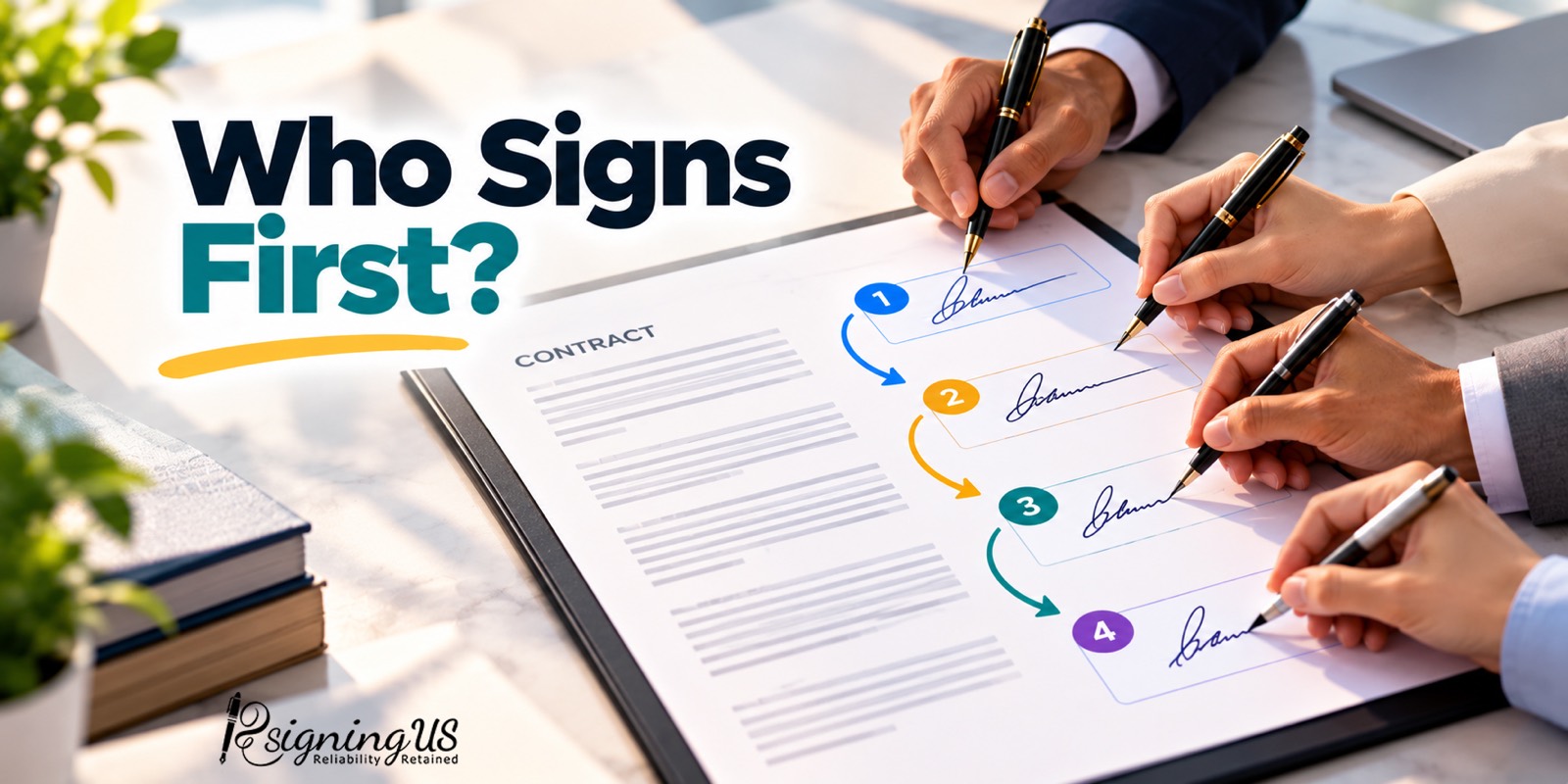
Signing order refers to the sequence in which people are expected to sign a document. Some contracts require one person to sign before another can proceed. Others allow everyone to sign independently.
Consider an employment agreement. A company may want its HR manager to approve the final terms before sending the agreement to a new employee. If both receive the document at the same time, the employee might sign before the company has completed its review.
A sequential signing workflow prevents this by sending the request to the first signer. The next person receives it only after the previous signer has completed their part.
However, not every contract needs a strict sequence. When several parties can sign independently, simultaneous signing may be more practical.
Why Signing Order Matters for Businesses#
It keeps approvals in the right sequence
Some contracts require internal approval before they reach an external party. A department manager may need to approve a purchase agreement before the supplier receives it for signature.
When the signing process follows that sequence, employees are less likely to send an unfinished agreement to the wrong person. It also gives the business a clearer process for reviewing commitments before they become final.
It prevents confusion between signers
Imagine a service agreement that requires signatures from a client and the company's authorized representative. If both receive the request without clear instructions, either person may wonder whether they should sign first.
A defined sequence removes that uncertainty. Each signer knows when their turn begins, which makes the process easier to follow.
It helps avoid unnecessary delays
When a contract is sent to several people at once, one signer may complete it while another is still waiting for clarification. The sender may then need to explain the process or issue a corrected request.
A well planned signing sequence helps prevent these situations. The document reaches each person at the appropriate stage, reducing the need for manual coordination.
Sequential Signing vs. Simultaneous Signing#
The right approach depends on how the agreement must be completed.
Sequential signing means one person signs before the next person receives the request. This works well when a manager must approve an agreement before an employee signs it. It is also useful when an internal review needs to happen before a contract reaches an external party.
Simultaneous signing allows multiple people to receive the document at the same time. This is useful when several business partners need to sign the same agreement and no party needs to wait for another's signature.
Neither method is automatically better. The important question is whether the agreement requires a particular sequence. If it does, the workflow should reflect that requirement rather than leave signers to work it out themselves.
How E-Signature Software Makes Signing Easier#
Managing a multi signer contract manually can become difficult when people work in different locations. Someone may need to remind the next signer that the document is ready, while another person waits for confirmation that the process is complete.
Electronic signature software simplifies document delivery by allowing businesses to send signing requests digitally. Depending on the platform, the sender may also be able to control the order in which recipients receive the document.
SigningUs is designed to make digital signing more convenient. Users can send a document for signature and share the signing link through channels such as email or WhatsApp. Signers do not need to install an app or create an account to sign through the described workflow.
For businesses that regularly send agreements to customers or employees, this can remove friction from the signing experience. Before sending a contract, the sender should still confirm that each recipient has the correct role and that the intended approval process is clear.
Explore SigningUs to learn more about its electronic signature solution.
Common Signing Order Mistakes to Avoid#
One common mistake is sending a contract to every signer before internal approval is complete. This can lead to confusion when the business later needs to revise the document.
Another problem occurs when the sender chooses an order without considering the actual agreement. A strict sequence can slow down a contract unnecessarily if all parties are free to sign independently.
Businesses should also review the document before sending it. If the wrong version reaches a signer, the entire process may need to be repeated.
A final check before sending helps the sender confirm that the contract is ready and that each recipient understands their role.
Frequently Asked Questions
Conclusion#
When a contract requires several signatures, the order can determine how smoothly the document moves from one person to the next. A clear sequence helps businesses avoid premature signing requests and reduces confusion during internal approvals.
Electronic signatures make it easier to send documents without relying on physical copies. When the signing workflow matches the agreement's requirements, the process becomes easier for both the sender and the recipients.
SigningUs helps businesses move toward a simpler digital signing experience. Visit SigningUs.com to explore how electronic signatures can make contract signing more convenient.
 The SigningUs teamWe build the signing flow behind this blog: upload a document, place the fields, send the link.
Send your next agreement with SigningUs
Upload a document, place the fields, and send the signing link. Your signers need no app and no account.
Get Started Free