People often use "digital signature" and "electronic signature" as if they meant the same thing. In everyday conversation that habit causes little harm. In a contract dispute or a compliance audit, however, the distinction can decide whether a signed document holds up. Understanding how the two work helps you pick the right option for each agreement.
What Is an Electronic Signature?#
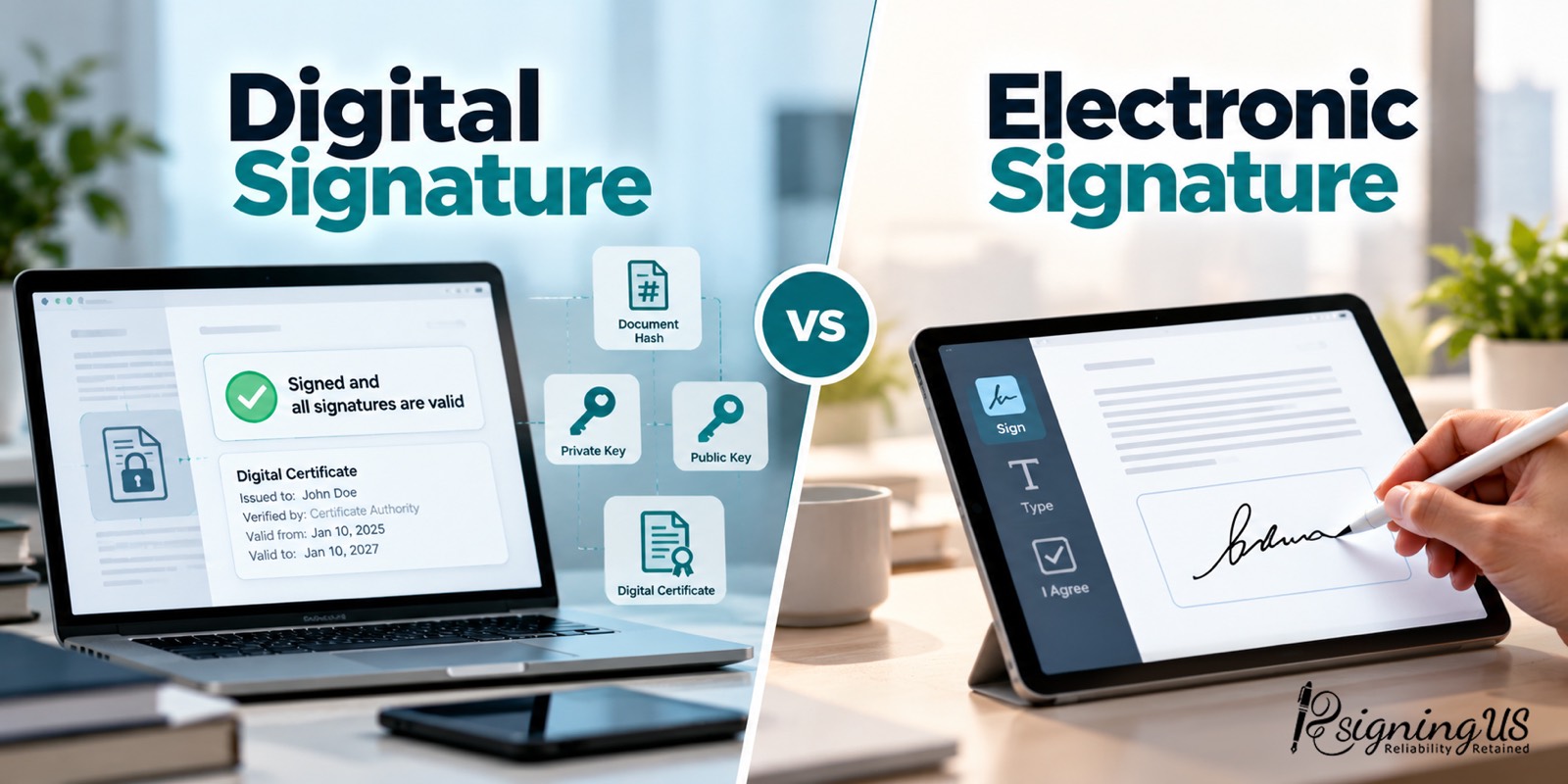
An electronic signature is any electronic indication that a person agrees to the contents of a record. The definition is deliberately broad. Typing your name at the end of an email or ticking an "I agree" box counts, and so does drawing your signature with a finger on a phone screen.
Most legal systems treat these methods as valid. The ESIGN Act and the Uniform Electronic Transactions Act cover the United States, while the eIDAS Regulation sets the framework across the European Union. Many other countries have passed comparable laws. Courts generally look for evidence that the signer intended to sign. They also expect the signature to be tied to the document and preserved in a record that can be retrieved later.
Because the law focuses on intent rather than technology, an electronic signature can be very simple. That simplicity explains why it dominates everyday business. A customer can approve a quote in seconds, and no special software or certificate is needed.
What Is a Digital Signature?#
A digital signature is a specific technical method that relies on cryptography. It uses a pair of mathematically linked keys: a private key that only the signer holds and a public key that anyone can use to check the result.
When a document is signed, the software first condenses it into a fixed-length code called a hash, which works like a fingerprint of the file. The signer's private key then encrypts that hash, and the encrypted value is attached to the document as the signature. When someone opens the file later, their software uses the public key to decrypt the signature and compares the result with a fresh hash of the document. If the two match, the file has not changed since it was signed.
A digital certificate adds the final piece. A trusted organization known as a certificate authority issues the certificate after confirming the signer's identity, and the certificate links that identity to the public key. This is why a PDF reader can display a message such as "Signed and all signatures are valid" and name the person behind the signature.
The Core Difference#
The simplest way to separate the two is to look at what each term describes. "Electronic signature" is a legal concept that covers any electronic method of showing consent. "Digital signature" is a technical process that uses encryption to prove who signed and whether the content stayed intact. Every digital signature is an electronic signature, but most electronic signatures are not digital signatures.
How They Compare in Practice#
Security. A basic electronic signature often relies on an email link or a password, which protects the process but not the document itself. A digital signature locks the content. If anyone alters a single character after signing, the signature becomes invalid and the software flags it.
Verification. Digital signatures can be checked independently by anyone with the right software, because the proof travels inside the file. Electronic signatures usually depend on an audit trail stored by the platform that collected them, so you must trust that the provider keeps accurate records.
Identity. A digital signature is tied to a certificate that was issued after an identity check. An electronic signature may confirm only that the signer had access to a particular email address or device.
Cost and effort. Electronic signatures are inexpensive and quick to set up. Digital signatures require a certificate, which sometimes comes on a hardware token and usually carries an annual fee.
When Each One Makes Sense#
Everyday business agreements such as nondisclosure agreements and offer letters rarely need more than a standard electronic signature. The risk is low and the signers know each other, so speed matters more than cryptographic proof.
A digital signature is the better choice when the stakes are higher. Financial agreements and clinical trial paperwork often call for stronger proof of authenticity. Some government tax portals and public procurement systems in several countries require digital signatures outright. The same applies to documents that must remain verifiable for many years, since the cryptographic seal still shows whether anyone has touched the file.
Many e-signature platforms combine both approaches. A user signs through a simple interface, and the platform then applies a digital certificate to seal the finished PDF. This gives the convenience of one with the tamper protection of the other.
Common Misconceptions#
One frequent mistake is assuming that a digital signature is a scanned image of a handwritten signature. It is not. The image is only a visual element, and the actual protection comes from the cryptographic data behind it.
Another is believing that electronic signatures carry no legal weight. In most jurisdictions they are fully enforceable. Certain documents are the exception, such as wills and some family law or property records, which may require additional formalities regardless of how they are signed.
Choosing the Right Option#
Start by checking which laws apply to your document and where your signers are located. Then consider how costly a forgery or a dispute would be, and decide how long the record must stay verifiable. If a regulator or a counterparty specifies a signature type, that requirement settles the question. When the rules are unclear, a short consultation with legal counsel is inexpensive compared with the cost of an unenforceable contract.
Final Thoughts#
Electronic signatures answer the question of whether someone agreed. Digital signatures answer the harder questions of who agreed and whether anything changed afterward. Both have a place in modern business, and knowing which one a given document needs protects you from unnecessary expense on one side and avoidable risk on the other.
 The SigningUs teamWe build the signing flow behind this blog: upload a document, place the fields, send the link.
Send your next agreement with SigningUs
Upload a document, place the fields, and send the signing link. Your signers need no app and no account.
Get Started Free