A prospective client decides to hire an immigration attorney. The consultation goes well, the firm explains the next steps, and the client agrees to move forward. Yet several days pass before the retainer agreement is signed. The attorney cannot begin the agreed work because the paperwork remains incomplete.
For immigration law firms, this delay can affect the entire onboarding process. Clients may be unfamiliar with legal terminology or unsure how to sign and return documents. Staff members then spend time sending reminders instead of preparing the next stage of the case.
A clear onboarding process helps prevent these delays. By simplifying how retainer agreements are prepared and signed, firms can make it easier for clients to complete the required paperwork.
Why Immigration Client Onboarding Often Gets Delayed#
Immigration matters frequently involve clients who are managing unfamiliar legal procedures. Some are located in another country or communicating with the firm across different time zones. A process that depends on printing, scanning, and emailing documents can create unnecessary obstacles.
Delays can also begin inside the firm. A staff member may finish preparing the retainer but forget to send it. Another employee may assume the agreement has already been delivered. Without a clear record of the document's status, the client may receive a follow up only after several days have passed.
The solution is not simply to send more reminders. Firms need a process that makes the next action clear for both the client and the employee handling the agreement.
How to Reduce Delays Between Consultation and Signature#
Prepare the retainer agreement promptly
Once the firm decides to proceed, the responsible employee should know when the retainer needs to be prepared and sent. A standard internal workflow can prevent approved cases from sitting unnoticed in a queue.
The agreement should be checked before it reaches the client. Incorrect names or outdated terms can force the firm to issue a revised document and restart the signing process.
Make signing convenient for clients
A client who needs to print a document, sign every page, scan it, and email it back may postpone the task simply because the process is inconvenient.
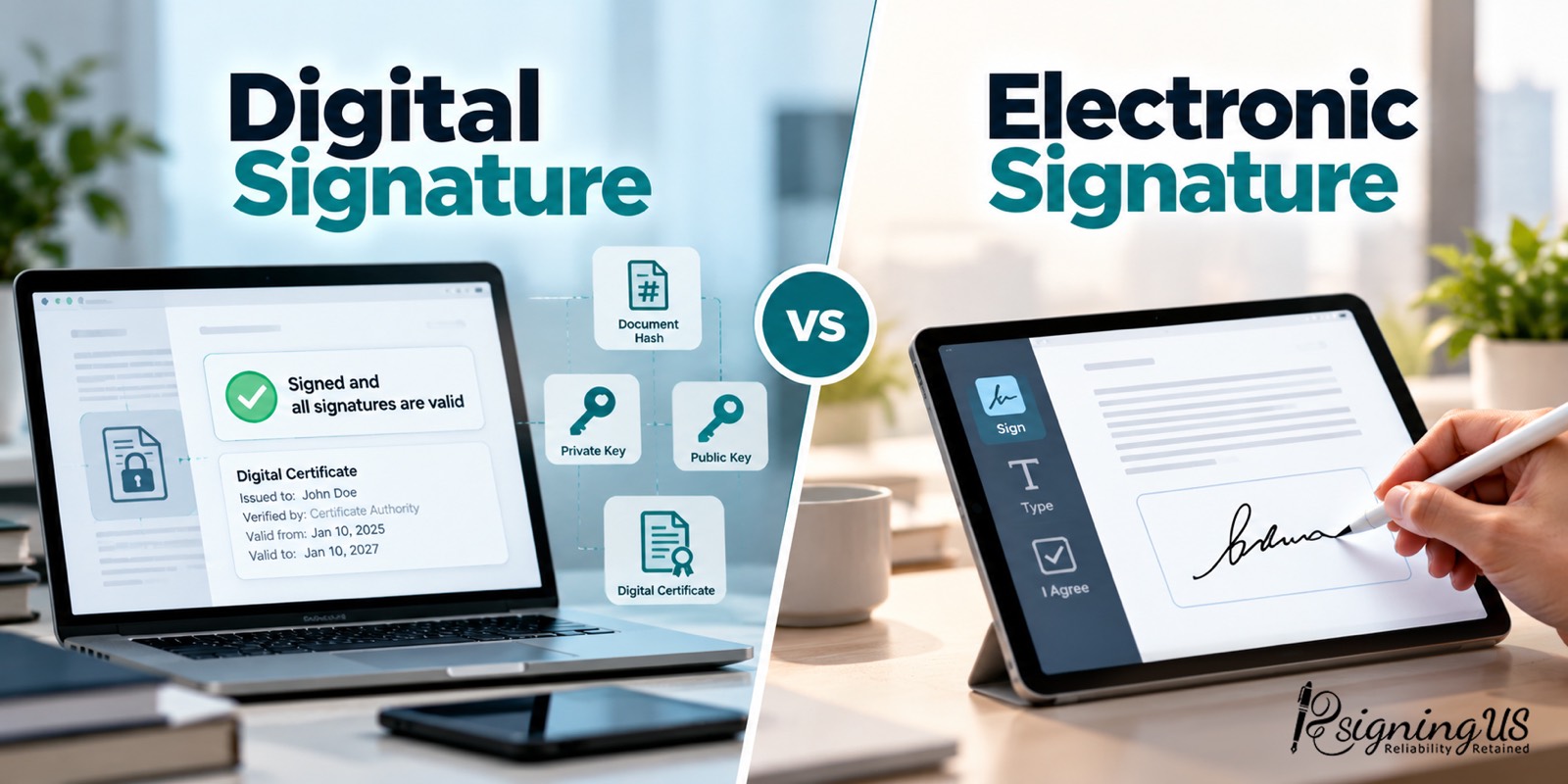
Electronic signatures remove much of that friction. The firm can send the agreement digitally, allowing the client to review and sign it without handling a physical copy.
SigningUs supports digital signing through a shared link that can be sent through email or WhatsApp. Its described workflow does not require signers to install an app or create an account. This can make the process easier for clients who are unfamiliar with the firm's document system.
Visit SigningUs to explore its electronic signature solution.
Give clients clear instructions
A client should not have to guess what happens after receiving a retainer agreement. The accompanying message should explain why the document has been sent and what the client needs to do next.
For example, the firm can tell the client to review the agreement carefully and contact the office if any terms need clarification. The message should also explain what the firm will do after receiving the signed document.
Clear instructions reduce avoidable questions without pressuring clients to sign before they understand the agreement.
Follow up when a signature is outstanding
Not every delay means a client has lost interest. The client may be reviewing the terms or may have overlooked the email.
Assign one staff member to check outstanding agreements. If the client has not signed within the firm's usual response window, that person can send a polite reminder. When the client raises a question about the agreement, the firm should address it rather than repeatedly requesting a signature.
Build a Consistent Retainer Signing Workflow#
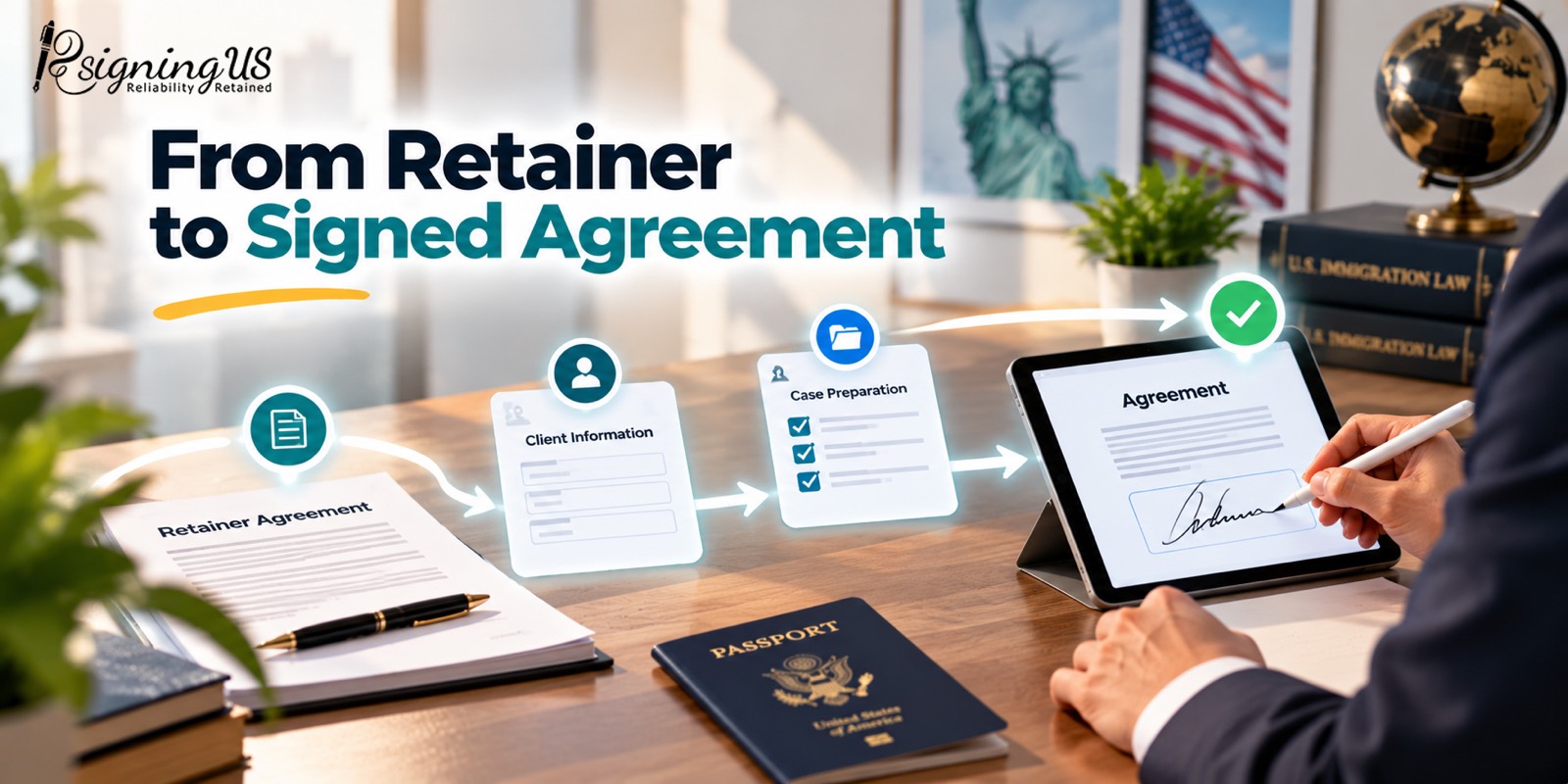
A consistent signing process helps immigration law firms identify where an agreement is getting delayed. Once a client agrees to proceed, the firm can prepare the retainer, review it for accuracy, and send it through SigningUs for signature.
If the agreement remains unsigned, the responsible staff member can follow up with the client. Once the signed document is returned, the firm can verify that the required signatures are complete and proceed with its internal onboarding steps.
SigningUs supports digital signing through links shared by email or WhatsApp. Clients do not need to install an app or create an account for the described signing process, which can make completing paperwork easier for people living abroad.
The firm should also establish a clear process for handling questions about the agreement. If a client needs clarification about a term, the appropriate staff member should address the concern before asking the client to proceed. A faster signing process should never come at the expense of informed consent.
Measure Where Onboarding Delays Occur#
Before changing the process, identify where time is being lost. A firm can compare the date an agreement was prepared with the date it was sent. It can then examine how long clients typically take to return signed agreements.
If documents frequently remain unsent after consultation, the problem may be an internal handoff. If clients receive agreements promptly but rarely complete them, the firm may need clearer instructions or a more convenient signing method.
Reviewing these patterns helps the firm make targeted changes instead of sending additional reminders to every client.
Frequently Asked Questions
Conclusion#
Client onboarding should not stall because an agreement is difficult to send or return. Immigration law firms can reduce avoidable delays by making each internal step clear and giving clients a convenient way to complete their paperwork.
Electronic signatures can simplify the process, while a consistent follow up workflow helps staff identify agreements that still need attention.
Explore SigningUs to make the retainer signing process more convenient for your clients.
 The SigningUs teamWe build the signing flow behind this blog: upload a document, place the fields, send the link.
Send your next agreement with SigningUs
Upload a document, place the fields, and send the signing link. Your signers need no app and no account.
Get Started Free